The journal
Best Sculptural Home Centerpieces for Your Table
Best Sculptural Home Centerpieces for Your Table
A dining table does not need a towering floral arrangement to feel memorable. Often, the
best sculptural home centerpieces
are the pieces that invite a second look while still leaving room for a shared meal, a candlelit conversation, or a favorite serving dish. A hand-finished pewter object inspired by a palm leaf, a sea creature, an ancient artifact, or a woodland animal can give the table its own point of view without making it feel over-styled.
The most rewarding centerpiece is not simply decorative. It belongs to the life of the home. It might hold candles on an ordinary Tuesday, organize small serving essentials during a dinner party, or rest on a console as a small work of art with a story to tell. That balance of beauty and purpose is what turns an accessory into a lasting part of the room.
What Makes a Sculptural Centerpiece Worth Choosing?
A sculptural centerpiece earns its place through silhouette, material, and meaning. Its form should have enough presence to be noticed from across the room, whether that comes from curling botanical lines, the textured body of a fish, or the dignified profile of a classical figure. Yet it should not compete with the people gathered around it.
Scale is the first consideration. A long dining table can welcome a pair of low candle holders or a composition of several related objects. A round breakfast table often looks best with one central piece that has a clear, graceful outline. For a narrow console, choose a centerpiece with height but a modest footprint, such as a sculptural candle holder or decorative vessel.
Material changes the mood as much as shape. Lead-free pewter offers a soft, silvery finish that catches candlelight without the hard shine of chrome. Its gentle luster works especially well beside wood, linen, ceramics, stone, and woven fibers. Handcrafted pewter also carries subtle variation in its surface and detail, giving a home the welcome feeling that its objects were chosen rather than ordered by the dozen.
Finally, consider the story in the design. A tropical leaf can echo a love of travel or a sunlit coastal home. An owl, turtle, or heron may speak to a personal connection with wildlife. Ancient Greek-inspired forms add a cultivated note to a library desk or formal dining room. These references make a centerpiece feel personal, even before a guest asks about it.
Best Sculptural Home Centerpieces by Room
For the dining table: low, useful, and full of atmosphere
Dining-table centerpieces should preserve sightlines. A
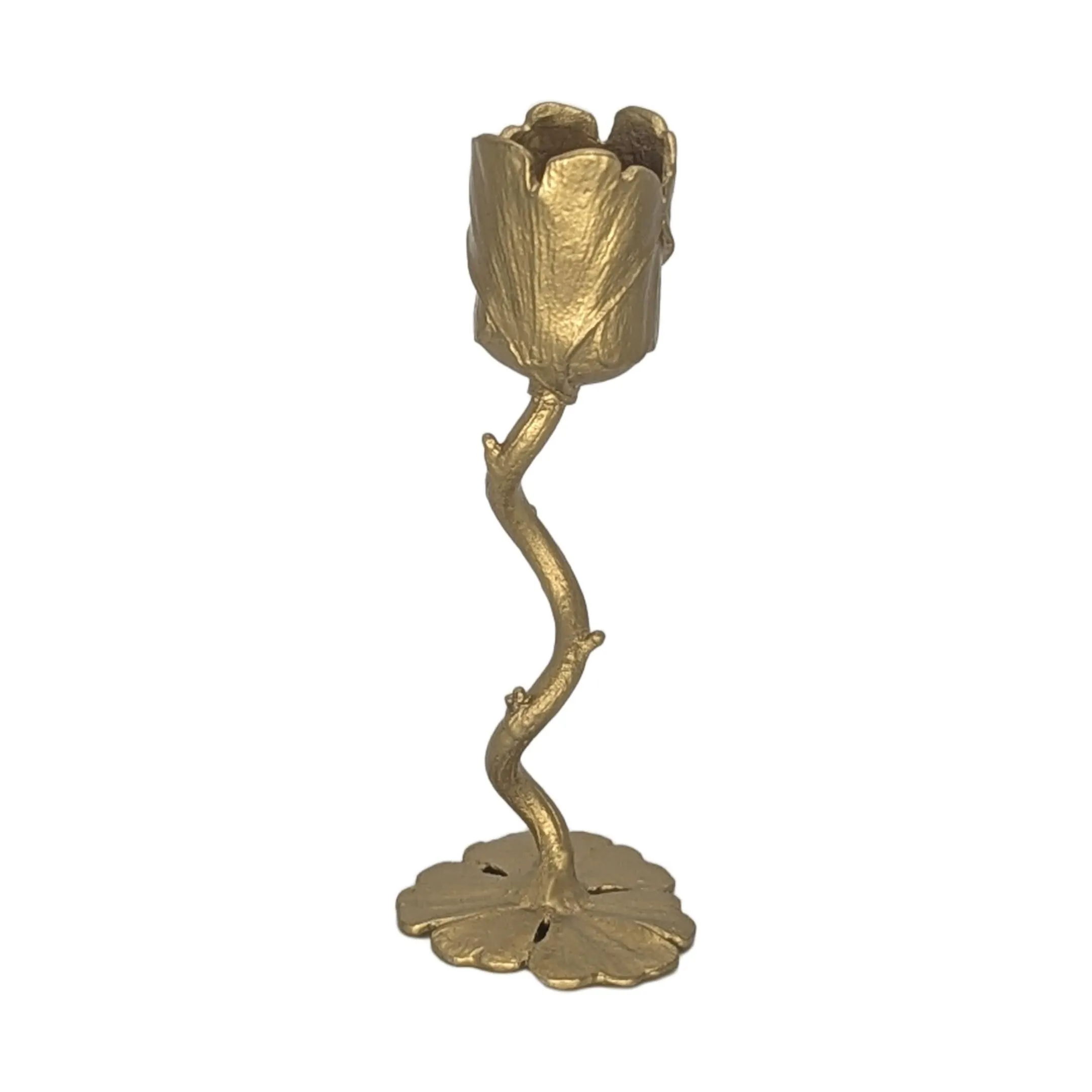
low sculptural candle holder
is one of the most versatile choices because it adds glow without creating a visual wall between guests. Choose forms that spread horizontally, such as branching botanicals, shells, leaves, or wildlife motifs, for a relaxed and welcoming table.
paired with a decorative spoon can also become a small but distinctive centerpiece for intimate meals. It is especially effective on a round table, where a single functional object can anchor the setting without overfilling it. During larger gatherings, place it near the serving dishes so its practical role feels natural rather than staged.
If your dining style is formal, use a sculptural object in the center and repeat its finish in smaller details, perhaps through matching napkin rings or serving accessories. The repetition creates a composed table, but the centerpiece remains the focal point. For a more collected look, mix pewter with handmade ceramics and natural linens, allowing each material to retain its character.
For the coffee table: choose a piece with a quiet profile
Coffee tables invite closer viewing, so detail matters. A small sculptural object with an animal, coastal, or botanical motif can be appreciated from a sofa without taking over the entire tabletop. Here, an object does not need to be tall to feel substantial. Intricate metalwork, a tactile surface, and an unexpected silhouette can do the work.
Keep the composition edited. A sculptural centerpiece, one or two art books, and a small candle are usually enough. If the table is used daily for snacks, games, or feet after a long day, select an object that can be easily moved or that provides a purpose, such as holding matches, small treats, or cocktail napkins.
For the entry console: make the first detail count
An entryway centerpiece has a different job. It sets the tone before anyone sees the rest of the home. A
handcast letter opener
displayed beside a business card holder, or a sculptural bowl used for keys, can make a practical landing place feel considered.
This is an ideal setting for historic and legendary motifs. An ancient art desk organizer or an artifact-inspired pewter accent can bring a sense of discovery to a hallway that might otherwise be purely functional. Pair it with a small lamp or a single framed artwork, rather than surrounding it with many small decorations.
For the desk: let organization become part of the decor
A desk centerpiece should support concentration, not distract from it. The right piece turns papers, business cards, letters, and small office essentials into an organized display. Wildlife-inspired card holders and decorative letter openers have the advantage of looking sculptural even when they are at rest.
This is where functional art is particularly satisfying. A beautiful object is within reach every day, not saved for company. It gives ordinary tasks a little more ceremony, whether you are opening mail, arranging client cards, or writing a note to someone you care about.
Choosing a Motif That Feels Like Home
Nature-inspired centerpieces are remarkably adaptable because they can read as refined, playful, or serene depending on the surrounding room. Tropical motifs suit spaces with warm wood, rattan, leafy plants, and bright natural light. They bring the easy spirit of whimsical Caribbean decor without requiring a fully themed interior.
Coastal forms, including shells, fish, and sea life, work beautifully in homes near the water, but they are not limited to beach houses. In a city apartment, a marine motif can be a small reminder of a favorite place. The key is restraint: choose one meaningful coastal object rather than filling every surface with nautical symbols.
Botanical designs bring softness to rooms with straight-lined furniture or cooler materials. A leaf-shaped candle holder on a stone table, for example, introduces movement and warmth. Animal motifs are more personal. They can reflect a cherished creature, a family memory, or an appreciation for the natural world, which makes them especially thoughtful as housewarming, wedding, host, and anniversary gifts.
Historic motifs offer another direction. They suit readers, collectors, and anyone drawn to objects with the presence of an excavated treasure. A classical-inspired piece can feel at home beside leather-bound books, dark wood, or a contemporary desk. It does not have to make the room traditional. One well-chosen artifact-like form can bring depth to a modern space.
How to Style Without Making the Table Feel Crowded
The temptation with a beautiful centerpiece is to surround it with more beautiful things. Resist that impulse. Sculptural design needs breathing room, especially when the piece has detailed casting or an expressive silhouette. Empty space lets the form read clearly.
For a dining table, begin with one central object or two matching low pieces. Add greenery only if it supports the shape rather than conceals it. A few clipped branches or a small cluster of seasonal foliage is often more effective than a large arrangement. If candles are part of the display, choose unscented tapers or votives for meals so their fragrance does not compete with food.
For a console or coffee table, work in varied heights but keep the palette connected. Pewter sits naturally with cream, deep green, ocean blue, warm terracotta, and black. Its finish also becomes more luminous in the evening, which is one reason candle holders and other reflective metal accents are so appealing in rooms used for entertaining.
There are trade-offs. Highly detailed pieces are wonderful conversation starters, but they may require occasional dusting in small crevices. Taller centerpieces create drama, but they can block views at the dining table. A purely decorative object may make a stronger visual statement, while a functional piece will likely be used and appreciated more often. The best choice depends on how the room is lived in.
A Handcrafted Centerpiece Makes an Easy Gift to Keep
Generic decor can be difficult to give because it asks the recipient to make room for another anonymous object. A handcrafted centerpiece feels different when its motif connects to the recipient: a tropical nature-inspired kitchen gift for a devoted host, a graceful animal accent for a wildlife enthusiast, or a historic desk accessory for someone building a home office.
Functional Art Designs by Hugo De Sánchez approaches these objects as usable decorative art. The hand-finished details and lead-free pewter material give each piece a sense of permanence, while the practical forms make them easy to welcome into daily rituals. That is an especially generous quality in a gift: it can be displayed, used, and remembered.
Choose the piece that feels most at home with the rituals already happening in the space. When candlelight, conversation, hospitality, and personal story meet in one sculptural form, even an ordinary surface can feel like a place worth gathering around.